
Radon Testing
Airdrie | Cochrane | Okotoks | Chestermere | High River | Crossfield | Black Diamond | Turner Valley | Redwood Meadows | Bragg Creek
Langdon | Didsbury | Water Valley | Irricana | Surrounding communities across the Calgary region
Book radon testing when buying a home, finishing a basement, or spending time in lower-level spaces. We offer two certified options: a Short Term Test (48–96 hours) for fast screening, and a Long Term Test (90 days) for accurate long‑term evaluation. Both use Health Canada‑approved devices to measure radon levels reliably and help you determine whether mitigation is recommended. Homes across Central Alberta often show seasonal variation, and proper testing is the only way to confirm if your levels exceed the 200 Bq/m³ guideline.
If elevated levels are found, we guide you through next steps and mitigation options. Many clients also pair Radon Testing with Mold | VOC | Particle Testing or Thermal Imaging for a more complete indoor air quality profile.
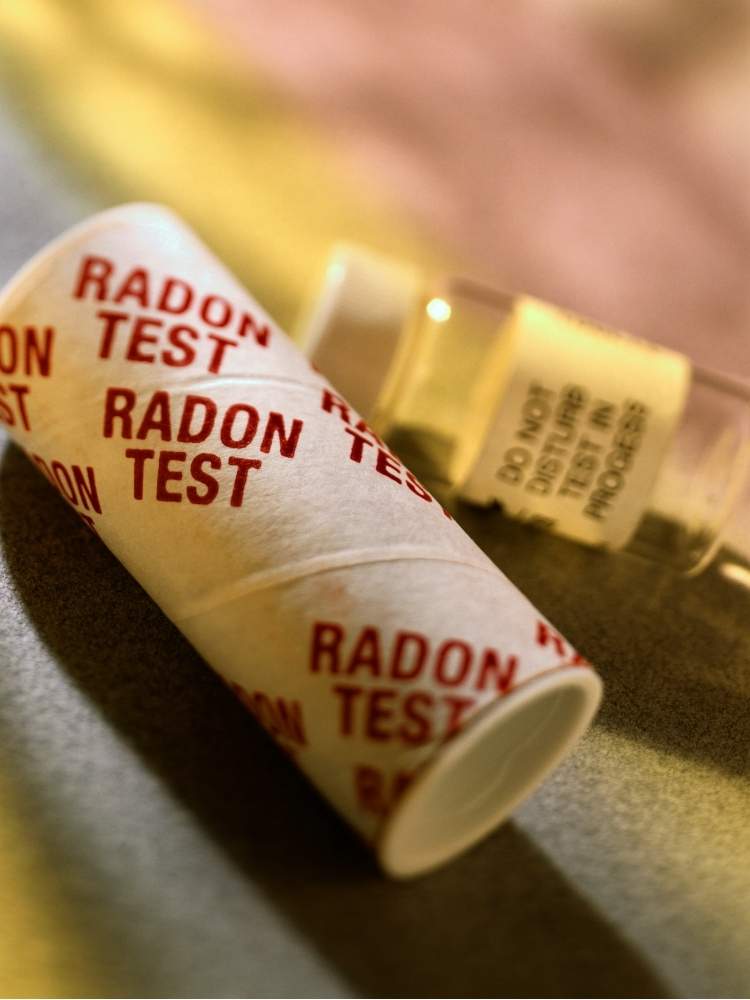
Radon testing is a simple, low‑cost way to understand your home’s air quality and make informed decisions about long‑term health. Most homes can be easily improved if your results come back above guideline levels, which is why routine testing is recommended across Central Alberta. Most homes can be mitigated very quickly and systems typically reduce radon by 80–95%
C-NRPP Certified | Health Canada-Approved Devices | AmeriSpec Academy Certified | Fully Insured company
Radon in Central Alberta

Central Alberta is considered a higher‑risk region, with national surveys showing elevated radon levels across many communities.
Levels vary dramatically from house to house due to soil conditions, foundation design, ventilation, and seasonal weather.
Communities such as Airdrie, Cochrane, Chestermere, Okotoks, High River, Crossfield, and nearby rural areas frequently report higher‑than‑average readings.
Winter months show the highest concentrations because homes stay sealed and furnaces run more often.
Why Alberta Homes Are More Prone to Radon
Alberta has some of the highest radon levels in Canada due to our soil composition, colder climate, and long heating seasons. Homes stay sealed for much of the year, which allows radon to build up more easily. Testing is the only way to know your home’s level.
What High Radon Levels Mean for Your Home
A high radon result doesn’t mean your home is unsafe to live in — it simply means action is recommended. Most homes can be mitigated in a single day, and systems typically reduce radon by 80–95%. Testing gives you the information you need to make an informed decision.
In Calgary and surroundings, do Chinooks affect radon levels?
Chinooks can cause short‑term changes in radon levels because of rapid shifts in temperature and air pressure. These swings are temporary and do not affect your long‑term average, which is what Health Canada uses to assess risk. Short‑term and long‑term testing options are available year‑round.
This short Health Canada video explains what radon is, how it enters a home, and why testing matters for every Canadian household.
It’s a simple, clear overview that helps homeowners understand the importance of knowing their radon levels.
How 72‑hour vs 90‑day radon results look different
72‑hour (short‑term) test
“This is a snapshot. It shows how radon behaves over a few days, but radon is very sensitive to weather and ventilation. So these numbers bounce around a lot. Short‑term tests are great for screening, but they can over‑ or under‑estimate your true exposure.”
What the Graph/Data looks like:
Hour‑by‑hour readings that jump up and down
Noticeable spikes during storms, furnace cycles, or nighttime stack effect
A final 72‑hour average that may be higher or lower than the long‑term reality
Typical appearance:
Jagged line
Big swings
Averages that shift if you add or remove a single day
90‑day (long‑term) test
“This is the gold standard. A 90‑day test captures different weather patterns, furnace cycles, and lifestyle habits. It evens out the spikes and dips, so the number you see is the true long‑term level. Health Canada bases decisions on long‑term averages, not short‑term fluctuations.”
What the Graph/Data looks like:
A smooth, steady trend
Minimal day‑to‑day noise
A reliable seasonally adjusted average that reflects real exposure
Typical appearance:
Gentle curve or nearly flat line
Very stable average
Resistant to short-term anomalies
FAQ related to Radon Testing
Radon testing is simple, affordable, and provides clarity for long‑term home safety. Because radon is invisible and varies from home to home, many homeowners have questions about testing and safety. This section answers the most common questions we receive and helps you understand what to expect from the process.
What’s the difference between a Short Term and a Long Term Test?
The Short Term Testing runs for 48–96 hours and gives indication if high levels of Radon are present and immediate action is required.
The Long Term Testing includes the 48-96 hour test + 90 days of monitoring period. This gives accurate and reliable results.
Do I need to keep my home closed during testing?
Yes, for best results. Only during the Quick Test, windows and doors must remain closed to ensure accurate results. The long‑term phase of the Full Test is conducted under normal living conditions.
What happens if my radon level is above 100 Bq/m³?
If your Quick Test result exceeds 100 Bq/m³, we recommend continuing with a Full Test to confirm long‑term exposure and guide mitigation decisions.
Health Canada recommends taking action when the long‑term average is 200 Bq/m³ or higher. Many homeowners choose to mitigate earlier for peace of mind.
Why do radon levels change so much?
Radon naturally rises and falls throughout the day due to weather, ventilation, and furnace cycles. That’s why averages—not single spikes—are used to assess risk. The highest and lowest readings still matter because they show how much your exposure can fluctuate and help identify unusual patterns.
Is radon testing required when buying or selling a home?
It’s not mandatory, but many buyers and sellers choose to test for peace of mind. Radon results can be included in purchase conditions or post‑purchase safety plans.
Is radon easy to fix if my levels are high?
Yes. Most homes can be successfully mitigated with a single system installed in one day, and levels typically drop by 80–95%.
Where can I learn more about radon?
If you’d like additional information from trusted public‑health organizations, these resources are helpful:
Health Canada – Radon Information
canada.ca/radon
1‑833‑723‑6600
Alberta Lung – Radon Awareness & Education
ablung.ca/get-support/radon-awareness-education
1‑888‑774‑5864
Take Action on Radon (National Initiative)
takeactiononradon.ca
Does Air Sealing | Blower Door Testing help with managing Radon levels? If Yes, How?
Yes - A blower door test shows how leaky or tight your home is and how pressure changes during depressurization. These pressure patterns can affect how radon moves into your home. The test helps you understand airflow and major leakage areas. It does not measure radon or show how much air enters from the soil, but it supports better radon mitigation planning. Radon testing is still the only way to know your true level.
More air circulation can help lower radon levels, while air‑sealing reduces energy loss and improves comfort. The goal is to find the right balance: enough ventilation to manage radon, and enough air‑sealing to keep your home efficient.
Does Mold, VOC & Particle Testing help with managing Radon levels? If Yes, How?
Yes - Mold, VOCs, and particles do not come from radon, but they often build up in the same areas and under the same conditions that allow radon to rise. Basements, lower‑level rooms, and poorly ventilated spaces can trap radon and also trap moisture, stale air, and airborne pollutants. When a home has limited airflow or pressure issues, both radon and indoor contaminants can build up more easily.
Testing for mold, VOCs, and particles gives you a fuller picture of your home’s air quality and helps you understand whether radon is the only concern or part of a larger indoor air quality issue.
Does Thermal Imaging help with managing Radon levels? If Yes, How?
Yes - Thermal imaging does not detect radon, but it helps find building issues that make radon entry easier.. Cold spots, missing insulation, air leaks, and moisture problems can create pressure changes or pathways that allow soil gas to move into the home more easily. By finding these weak points, thermal imaging supports better radon control and helps you understand why radon levels may rise in certain seasons or areas of the home.
Does a Maintenance Inspection help with managing Radon levels? If Yes, How?
Yes - A maintenance inspection helps find problems that allow radon to enter more easily., especially in lower‑level spaces. Foundation cracks, gaps around plumbing, unsealed sump pits, and poor air‑sealing can all create pathways that allow soil gas to enter more easily. The inspection does not measure radon, but it helps you find and fix the conditions that increase radon risk. Radon testing is still the only way to know your true level.

Expert Protection Now: Same-Day Reports, NRCan Alerts
Act now: hit the 12-month deadline by booking Same-Day Reports to secure NRCan Protection and unlock CMHC/CEIP refunds right away.

Integrity
Honesty and transparency.

Excellence
Top-notch services.
FOLLOW US


COMPANY
CUSTOMER CARE
Copyright 2026. InspectionExperts. All Rights Reserved.